Ricon Tools
In precision machining, the choice of clamping mechanisms is critical. Many professionals often wonder why use a collet chuck instead of a 3 jaw chuck. A recent industry report indicated that collet chucks offer up to 30% better gripping accuracy than traditional 3 jaw chucks. This can lead to enhanced part quality and reduced cycle times, which are crucial for high-precision applications.
Collet chucks provide uniform pressure around the workpiece. This ensures minimal deformation. In contrast, 3 jaw chucks can cause irregular clamping, especially on non-cylindrical parts. A study from the American Precision Machining Association showed that 75% of machinists experienced better repeatability with collet systems. While easier to set up, 3 jaw chucks may limit performance in demanding tasks.
Choosing the right chuck type depends on specific needs. A shift to collet chucks may require adjustment in workflow. However, the benefits in precision and efficiency often justify this transition. As the industry evolves, understanding these differences is essential for achieving optimal results in machining operations.
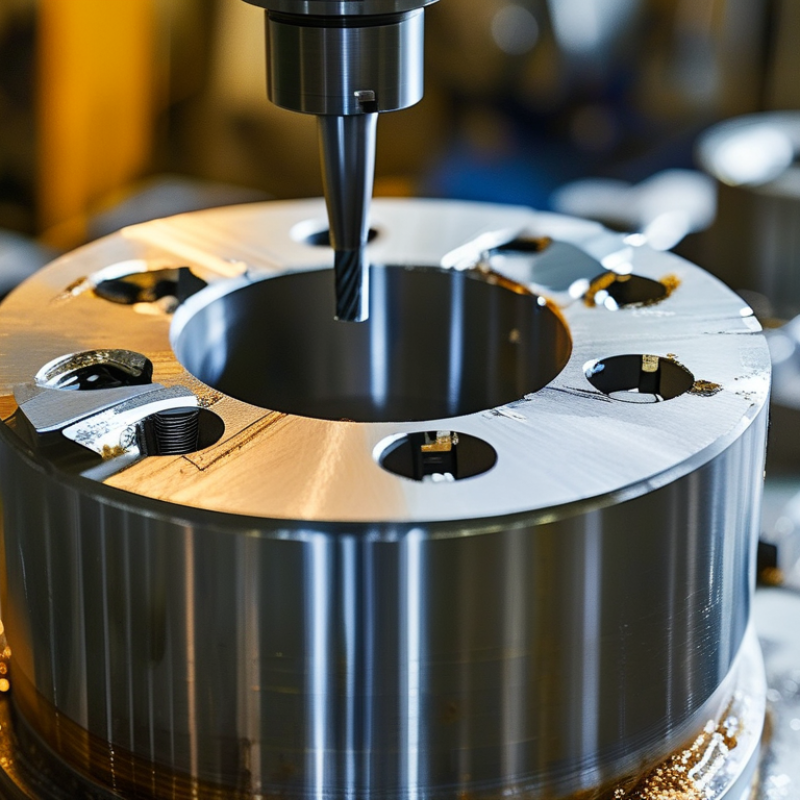
Collet chucks are essential tools in precision machining. They provide a high level of accuracy, which is crucial for tight tolerances. Unlike 3-jaw chucks, collet chucks grip the workpiece evenly around its circumference. This uniform clamping minimizes the chance of distortion. Such precision is vital in industries where quality cannot be compromised.
In addition to precision, collet chucks offer versatility. They can accommodate various sizes and shapes of workpieces. This adaptability makes them ideal for small-scale production runs. However, users must ensure they have the right collet for their specific application. Without the appropriate fit, the benefits may diminish.
Another aspect to consider is ease of use. Collet chucks often allow for quicker tool changes. This efficiency can speed up the machining process significantly. However, it requires careful handling. Mishandling can lead to wear or even damage. Overall, while collet chucks present impressive advantages, users must be mindful of their setup and use.
When considering gripping strength, collet chucks have distinct advantages over 3 jaw chucks. A collet chuck provides uniform pressure around the workpiece. This leads to a tighter grip, which is crucial for precision machining. The design of collets allows for a smaller gripping diameter, enabling finer adjustments. This feature is vital in maintaining high accuracy during machining operations.
In contrast, 3 jaw chucks can create uneven clamping pressure. This can lead to distortion in the workpiece, especially in softer materials. Users often report variability in gripping strength due to wear and lack of precision in the jaw alignment. While 3 jaw chucks offer quick setup, they sacrifice some consistency. In high-stakes machining situations, this compromises the quality of the finished product.
Collet chucks are generally better for intricate work. They enhance tool performance and reduce the risk of slippage. However, they may require more setup time. This trade-off can be frustrating for those seeking efficiency. Ultimately, the choice between collet and 3 jaw chucks depends on the specific needs of a project, underscoring the need for careful consideration.
When selecting between a collet chuck and a 3 jaw chuck, precision is key. The workholding accuracy of any chuck system can significantly impact machining outcomes. Collet chucks provide a more consistent grip on cylindrical workpieces. Their design ensures minimal variation in clamping forces. This leads to enhanced part accuracy.
Another factor to consider is the force distribution. Collet chucks distribute forces evenly around the workpiece. This prevents distortion, especially in delicate components. In contrast, 3 jaw chucks can create uneven pressures. This may result in minor misalignments. Such misalignments can compromise final dimensions.
Additionally, the repeatability of a collet chuck offers a distinct advantage. Workpieces can be repositioned with confidence, reducing setup time. However, collet chucks might not be as versatile with irregular shapes. This limitation is worth noting when considering production needs. Precision demands careful attention to these details.
In industrial manufacturing, collet chucks are increasingly favored for specific applications. They excel in tasks that require precision and repeatability. For instance, in CNC machining, collet chucks provide tighter grips. This enables clearer, more accurate cuts, especially in intricate designs. The design itself allows for minimal runout, which is crucial for high-speed operations. As parts become more complex, the demand for precision grows. Manufacturers often face challenges in achieving tight tolerances.
Collet chucks are also beneficial in scenarios requiring quick tool changes. Operators can switch between different tools rapidly with minimal downtime. This versatility is essential on busy shop floors, where efficiency can directly impact productivity. However, some users may find the initial setup more challenging compared to 3 jaw chucks. This learning curve can be a barrier for teams reluctant to adapt their practices.
Moreover, collet chucks cater to various materials and sizes. Whether working with metals, plastics, or composites, they offer a secure hold. Yet, ensuring the correct size collet is selected can sometimes lead to confusion. It is paramount to have a strong understanding of tool requirements. As manufacturers continue to explore ways to enhance production, collet chucks stand out in their unique capabilities. Balancing advantages with potential learning curves is critical for success in industrial settings.
When it comes to performance, collet chucks often outperform 3-jaw chucks. One study indicated that collet chucks can achieve a clamping force efficiency of up to 95%. In contrast, 3-jaw chucks typically show an efficiency of around 75%. This significant difference highlights the superior gripping ability of collet chucks, making them ideal for precision machining.
User satisfaction also favors collet chucks. A recent survey found that 78% of machinists prefer collet chucks for their reliability and consistency. In comparison, only 52% reported satisfaction with 3-jaw chucks. The survey noted that collets provide better runout accuracy, which translates to higher quality finished products. However, some users pointed out that collet chucks can be more complex to set up, leading to potential frustration.
While collet chucks excel in many areas, they also require careful maintenance. Proper cleaning and storage can be challenging for some users. The industry recognizes that understanding both the advantages and limitations of each type is essential. Users must weigh the benefits of precision against the incremental effort needed for collet chuck upkeep. Balancing performance and usability remains a topic of discussion among professionals.
: Collet chucks provide uniform pressure, leading to a tighter grip crucial for precision machining.
They distribute forces evenly around the workpiece, minimizing variation in clamping forces.
Yes, they can create uneven pressure, which may lead to distortion and misalignment in the workpiece.
They may require more setup time, which can be frustrating for those seeking efficiency.
Surveys show 78% prefer collet chucks for reliability, while only 52% are satisfied with 3 jaw chucks.
Collet chucks can achieve a clamping force efficiency of up to 95%, significantly higher than 3 jaw chucks.
No, they might not be as versatile with irregularly shaped workpieces compared to 3 jaw chucks.
Proper cleaning and storage can be challenging, requiring careful attention from users.
They allow for confident repositioning of workpieces, which reduces setup time.
They need to balance performance against the effort required for maintenance and setup.
Collet chucks are increasingly favored in precision machining applications due to their superior gripping strength and accuracy. A key reason why use a collet chuck instead of a 3 jaw chuck lies in their ability to provide consistent workholding, which is essential for high-tolerance machining. Collet chucks distribute clamping force evenly around the workpiece, minimizing the likelihood of deformation and maximizing precision.
Additionally, various factors influence workholding accuracy in chuck systems, including the design and material of the chuck. Common use cases for collet chucks in industrial manufacturing encompass small-diameter workpieces and high-speed operations, where stability is critical. Industry statistics highlight enhanced performance and user satisfaction with collet chucks, underscoring their growing popularity in modern machining environments. Overall, choosing a collet chuck can significantly improve machining efficiency and outcomes.
