Ricon Tools
Achieving precise machining often hinges on effectively dialing in a boring head. The process may seem straightforward, yet it requires a keen understanding of the tool's adjustments. As machinists, we face challenges that necessitate persistence and a willingness to learn from mistakes.
Knowing how to dial in a boring head precisely can significantly enhance the quality of your work. However, inconsistencies can arise from improper setup, leading to flawed dimensions or surface finishes. When setting the boring head, take the time to measure accurately. Use quality tools to verify your setup.
Each step carries the potential for human error. Perhaps the most common mistake lies in overlooking subtle adjustments. It’s essential to approach this task with both care and patience. Craftsmanship isn't just about getting it right; it’s about making incremental improvements. By reflecting on your routine, you can refine your technique and achieve superior results. Trust the process, and learn as you go.
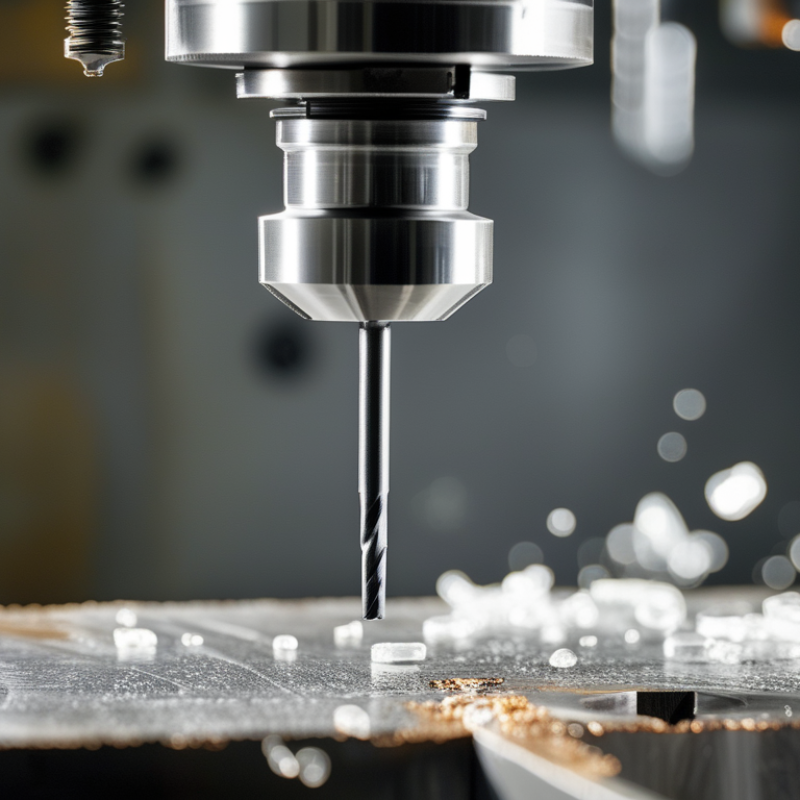
A boring head is a critical tool in precision machining. Its function is to enlarge or finish holes to exact dimensions. This tool allows machinists to achieve tight tolerances and maintain surface quality. A study by the Association for Manufacturing Technology (AMT) indicates that precision boring contributes significantly to operational efficiency, improving productivity by up to 25%.
The importance of a properly dialed-in boring head cannot be overstated. A misaligned head can lead to significant errors. Inaccurate hole sizes or poor finishes are common consequences. According to the National Institute of Standards and Technology (NIST), even minor inaccuracies can increase production costs by up to 15%. Ensuring the boring head is dialed in correctly mitigates these risks.
Setting the boring head requires understanding its features. Knowing how to adjust the offset is crucial. Machinists often struggle with this process, but practice improves performance. It’s vital to verify the setup frequently. Some operators overlook this step, leading to costly mistakes. Frequent checks can ensure optimal results and reduce wasted materials. Proper training and practice can enhance proficiency and effectiveness in machining tasks.
When using a boring head, understanding its key components is essential for achieving precision. The primary parts include the body, cutting tool, and adjustment mechanism. The body holds the cutting tool in place, while the adjustment mechanism ensures fine tuning for depth and angle. These components work together to provide the desired outcome in machining.
Tips: Regularly inspect the cutting tool. A dull tool can lead to inaccuracies. Ensure that the boring head is securely fastened to the machine. A loose head can cause vibrations, compromising the precision of your work.
The effectiveness of a boring head often relies on its calibration. Adjusting the mechanism allows for precise cuts. However, even the best setups might not guarantee perfect results every time. Variances in material or machine condition may contribute to errors.
Tips: Always test the setup on scrap material. This can help identify issues before working on the actual project. Be prepared to make small adjustments as the machining process continues. Flexibility leads to improved outcomes.
Setting up a boring head accurately is crucial for achieving precision in machining. Begin by ensuring your workpiece is firmly secured. Any movement can lead to measurement errors. It’s wise to use a reliable level tool to check the machine’s alignment. A level setup guarantees that your boring head operates optimally.
When adjusting the boring head, make precise incremental changes. This allows for fine-tuning adjustments that ensure the perfect cut. Use a depth gauge for accurate measurements. Remember, over-adjusting can lead to issues, so proceed with caution. Pay attention to the feedback from your machine. Sounds and vibrations can indicate misalignment.
Tips: Always double-check your initial setup before beginning. A small oversight can result in a flawed machining process. Keep your workspace clean to minimize distractions. This aids in maintaining focus and accuracy. Document your setup process for future reference. Identifying what works well and what doesn’t will enhance your skills. Keep learning from every setup; it’s a journey of gradual improvement.
Achieving precise depth and diameter adjustments in machining with a boring head can be challenging. A well-calibrated boring head is crucial for accuracy. It involves meticulous techniques for achieving the desired measurements. Regular checks and minor corrections are essential.
When adjusting the boring head, ensure the setup is secure before making any changes. This prevents unwanted shifts during machining. Use fine increments for depth adjustments to avoid overcutting. The goal is to achieve a tight fit without forcing material.
**Tips:** Always measure twice before finalizing your settings. A small miscalculation can have significant consequences. Practice with scrap material to fine-tune your technique. Don't rush the process. Each adjustment should be made with patience and precision, reflecting the importance of attention to detail. Adjust your boring head gradually and be prepared to make multiple passes.
Dialing in a boring head is essential for achieving precise machining results. Common mistakes can lead to frustrating inaccuracies. One frequent error is misreading the dial gauge. Operators often overlook how even a slight deviation affects the final dimensions. Data from the Precision Machining Association indicates that a 0.001-inch error can result in a 25% reduction in part quality. This reality calls for a careful approach.
Another mistake to avoid is improper alignment. Many machinists do not consider the importance of setting the boring head parallel to the spindle axis. Without this alignment, dimensional variances can occur. A study from the National Institute of Standards and Technology found that misalignment could lead to 15% of production defects. This highlights the necessity of thorough checks before starting the machining process.
In addition, overlooking wear on the cutting tool can lead to significant issues. Dull tools generate excess heat and reduce precision. According to manufacturing experts, 20% of machining failures stem from tool wear that went unnoticed. Paying attention to maintenance schedules is critical for consistency. Each of these aspects requires careful consideration to enhance machining outcomes.
| Mistake | Description | Impact | Prevention Tips |
|---|---|---|---|
| Improper Setup | Not securing the boring head firmly can lead to inaccuracies. | Results in machining errors and poor surface finish. | Ensure it is tightened properly before use. |
| Incorrect Dialing | Failing to properly dial in the head can lead to misalignment. | Can cause excessive tool wear and part inaccuracy. | Double-check measurements and adjust accordingly. |
| Not Using the Right Tools | Using unsuitable measuring tools can skew results. | Leads to part defects and wasted material. | Use calibrated tools for precise measurement. |
| Ignoring Play in the Setup | Not accounting for any movement in the setup affects accuracy. | Could result in uneven cuts and finish quality. | Verify rigidity of the setup before starting. |
| Neglecting Lubrication | Failing to lubricate the tool can lead to overheating. | Results in tool wear and decreased machining performance. | Always use appropriate lubrication when machining. |
: Accurate setup ensures precision in machining. Any movement can cause measurement errors.
Use a reliable level tool. A level setup enhances the boring head's performance.
Secure the setup firmly. This prevents unwanted shifts during the machining process.
Make incremental changes using a depth gauge. Avoid over-adjusting to prevent issues.
Pay attention to sounds and vibrations. They can indicate that the setup is misaligned.
Measure twice before finalizing settings. A minor miscalculation can result in major problems.
Practice with scrap material. This helps fine-tune techniques without risking valuable pieces.
Keep your workspace clean. A tidy environment aids in maintaining focus and accuracy.
Document what works and what doesn’t. This can enhance skills over time.
Be patient and attentive to detail. Each adjustment is a step toward improvement.
In the article "How to Dial in a Boring Head Precisely for Perfect Machining," the author highlights the essential role of a boring head in achieving accurate machining results. Understanding its function and the key components—such as the cutting tools and adjustment mechanisms—is crucial for effective use. A detailed step-by-step procedure is presented to help users set up the boring head accurately. Furthermore, the article outlines techniques for precise depth and diameter adjustments, ensuring optimal performance.
Additionally, the author discusses common mistakes to avoid when dialing in a boring head precisely. By adhering to these guidelines, machinists can enhance their skills and ensure higher quality outputs in their work. This comprehensive approach not only facilitates a deeper understanding of the equipment but also empowers users to achieve exceptional precision in their machining tasks.
