Ricon Tools Ricon Tools

Top 10 Reasons Why a 4 Jaw Chuck Grips Better Than a 3 Jaw

Time:2026-09-18 Author:Henry
0%

Choosing the right chuck can change the accuracy, safety, and efficiency of a turning operation. Many machinists prefer a four-jaw independent chuck when a workpiece needs controlled alignment. Its jaws move separately, allowing the operator to correct visible runout with a dial indicator. A three-jaw scroll chuck moves all jaws together, making setup faster but less adjustable. This difference matters when holding square stock, irregular shapes, eccentric parts, or delicate components. So, why does a 4 jaw chuck have better grip than 3 jaw? The answer involves contact control, jaw movement, clamping force, and workpiece geometry.

A four-jaw chuck does not automatically grip every part better. Proper adjustment still matters. Uneven tightening can distort thin tubing or mark a polished surface. In a real workshop, machinists often tap the workpiece gently, check the indicator, and tighten each jaw in small steps. That process takes longer. It can also produce a more stable setup for demanding cuts. The following reasons examine how independent jaw control improves holding performance, especially during interrupted cuts and heavy machining. They also consider situations where a three-jaw chuck remains the practical choice. Speed has value. Accuracy has a price. This comparison focuses on measurable behavior rather than broad claims, while recognizing that chuck quality, jaw condition, lubrication, and operator skill can change the result.
Top 10 Reasons Why a 4 Jaw Chuck Grips Better Than a 3 Jaw

Four-Jaw and Three-Jaw Chucks: How Their Designs Differ

A four-jaw chuck and a three-jaw chuck use different gripping principles. A three-jaw chuck moves all jaws together through one scroll mechanism. This self-centering action is fast and convenient for round or hexagonal stock. However, its fixed jaw relationship limits adjustment. Small dirt particles or uneven wear can also create noticeable runout.

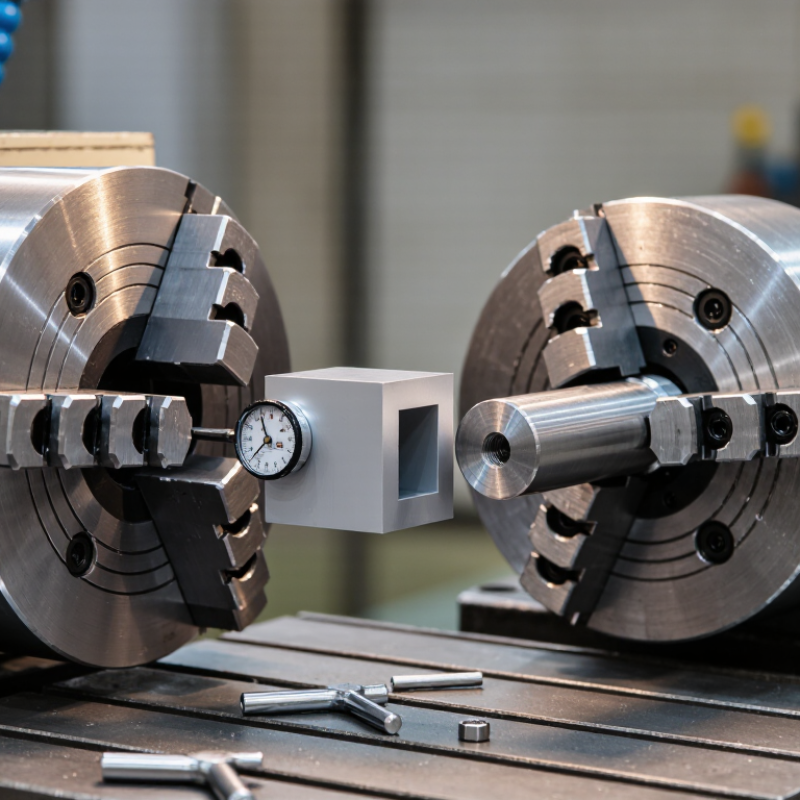
A four-jaw chuck uses independent screws for each jaw. Each jaw can move separately. That control lets the operator center round stock more accurately with a dial indicator. It also holds square, rectangular, and irregular workpieces more naturally. Pressure can be balanced across the workpiece, reducing unwanted movement during cutting. The setup takes longer. It often rewards patience.

I have found the difference clearly on thin-wall tubing. Excessive pressure from a three-jaw chuck can distort the tube. A four-jaw chuck allows lighter, measured contact at several points. Its grip is not automatically stronger, though. Poor adjustment, dirty jaw faces, or uneven tightening can reduce security. I still check jaw contact, clean the gripping surfaces, and verify runout before machining. That extra check matters. Four jaws offer more control, but control demands more skill.

Independent Jaw Control and Its Effect on Workpiece Alignment

Top 10 Reasons Why a 4 Jaw Chuck Grips Better Than a 3 Jaw

Independent jaw control is the strongest reason a four-jaw chuck improves alignment. Each jaw moves separately, allowing the operator to correct eccentricity instead of accepting the chuck’s fixed pattern. A dial indicator shows the difference clearly. On a 100 mm workpiece, 0.02 mm radial error creates approximately 0.04 mm total indicated runout at the surface. That error can affect boring, threading, and shoulder accuracy.

ISO 230-1 and ISO 230-2 provide recognized methods for checking machine-tool geometry and positioning accuracy. However, these standards do not eliminate setup errors. The operator still controls the final alignment. Technical guidance from the National Institute of Standards and Technology stresses traceable measurement and uncertainty evaluation, which supports using a calibrated indicator during chuck setup. Four-point adjustment also helps compensate for slightly irregular stock or an off-center casting.

The grip can be slower to establish. That is the trade-off. In practical turning work, I have found that small jaw movements often correct alignment more reliably than repeated tapping. Still, this depends on clean jaw faces, consistent tightening, and patient measurement. A careless setup can make a four-jaw chuck less accurate than a three-jaw chuck. That part is easy to overlook.

Why Four-Jaw Chucks Provide Stronger, More Adaptable Clamping

Top 10 Reasons Why a 4 Jaw Chuck Grips Better Than a 3 Jaw

Why Four-Jaw Chucks Provide Stronger, More Adaptable Clamping

A four-jaw independent chuck gives each jaw its own adjustment. This lets machinists center square, rectangular, irregular, and off-center workpieces accurately. A three-jaw scroll chuck moves all jaws together, which is faster but less adaptable. ISO 230-1 separates positioning accuracy from repeatability, making this distinction important during precision turning. A four-jaw setup can correct visible runout with a dial indicator, often within a few micrometres on a carefully prepared machine.

The gripping advantage is also practical. Four contact points distribute radial pressure more evenly around a rigid workpiece. They reduce rocking, especially when the stock has flat sides or an uneven surface. Industry energy studies from the U.S. Department of Energy identify workholding and setup losses as major contributors to machining inefficiency. Independent adjustment can reduce repeated repositioning, though it requires more operator time. That trade-off is real.

A four-jaw chuck is not automatically better. Poor jaw alignment, excessive tightening, or thin-wall distortion can still damage accuracy. I have seen a stable-looking setup leave bright pressure marks on aluminum. Softer jaws, measured torque, and gradual tightening help prevent that problem. Keep the overhang short. Check the workpiece at several jaw positions. The extra control often matters most when the job changes shape, requires eccentric turning, or demands reliable clamping under interrupted cuts.

Top 10 Reasons Why a 4 Jaw Chuck Grips Better Than a 3 Jaw - Why Four-Jaw Chucks Provide Stronger, More Adaptable Clamping

No. Clamping Factor Four-Jaw Chuck Three-Jaw Chuck Practical Advantage
1 Independent jaw adjustment Each jaw moves separately, allowing the operator to position and load the workpiece precisely. All jaws move together through a common scroll mechanism. More control over contact pressure and workpiece position.
2 Irregular and non-round workpieces Can clamp square, rectangular, offset, cast, and unevenly shaped parts by adjusting each jaw independently. Works best with regularly shaped round or hexagonal stock that is centered by the scroll. Provides a wider range of usable workpiece shapes.
3 Off-center turning Allows the workpiece axis to be deliberately offset from the spindle centerline. Normally centers the workpiece automatically and is not designed for controlled eccentric setups. Supports eccentric turning and special machining setups.
4 Centering accuracy The operator can indicate the workpiece and adjust the jaws until the required runout is achieved. Usually offers faster self-centering, but chuck wear, dirt, or scroll clearance can affect repeatability. Enables precise setup correction when low runout is important.
5 Jaw pressure distribution Jaw positions can be balanced to keep the workpiece supported at selected contact points. The scroll moves all jaws together, which may not suit uneven or interrupted surfaces. Reduces rocking and improves stability on difficult shapes.
6 Resistance to workpiece rotation Independent tightening allows the operator to achieve firm, balanced contact on the available surfaces. Provides strong holding for suitable round stock, but grip can be less effective if the part is uneven or poorly seated. Can improve resistance to torque when the workpiece geometry is challenging.
7 Workholding flexibility Supports inside gripping, outside gripping, stepped jaws, soft jaws, and custom jaw arrangements. Also supports different jaw types, but the synchronized movement limits independent positioning. Adapts more easily to one-off and custom machining jobs.
8 Thin-wall and delicate parts Clamping force can be distributed and adjusted at individual jaws to reduce distortion risk. Synchronized clamping is convenient, but pressure may need additional control when walls are thin or flexible. Offers finer control over deformation-sensitive workpieces.
9 Setup security The operator can verify jaw contact and correct uneven seating before machining begins. Fast clamping can make setup easier, but an incorrectly seated or irregular part may not be corrected independently. Improves the ability to detect and correct unstable setups.
10 Heavy or interrupted cuts A carefully balanced setup can provide strong support for demanding cuts, provided the chuck, jaws, and machine are correctly rated. Can perform very well on properly centered, regular stock, especially when rapid loading is valuable. Offers greater setup adaptability, although actual holding force depends on chuck design, jaw condition, tightening torque, and workpiece contact.

Note: A four-jaw chuck is not automatically stronger in every application. Its main advantages are independent adjustment, improved adaptability, and the ability to optimize alignment and contact for the specific workpiece. Proper jaw engagement, correct tightening, clean contact surfaces, and safe operating speed remain essential.

Improving Accuracy with Four-Jaw Chuck Centering Adjustments

A four-jaw chuck can improve machining accuracy because each jaw moves independently. This control allows precise centering of round, square, and irregular workpieces. A three-jaw chuck centers quickly, but its fixed relationship may leave small runout. Small errors matter.

Begin by cleaning the chuck face, jaw steps, and workpiece. Even a thin chip can tilt the material. Mount the workpiece with moderate pressure, then place a dial indicator against a clean reference surface. Rotate the spindle by hand and note the high and low readings. Keep the spindle still.

Adjust opposing jaws in small, balanced movements. Loosen one jaw slightly while tightening the opposite jaw. Watch how the indicator responds after every adjustment. Avoid forcing the workpiece, since excessive pressure can distort thin stock. For better repeatability, check the reading near both ends of a long workpiece.

Experienced machinists often mark the high point before adjusting. This simple habit reduces confusion during repeated checks. Recheck the work after tightening all jaws, because final pressure can shift alignment. A target within a few hundredths of a millimeter may suit rough work, but precision jobs require tighter control.

The exact tolerance depends on the machine, material, and operation. I sometimes rush this process and regret it later. A careful second measurement is rarely wasted. Four independent jaws offer strong holding power, but accurate results still depend on patient setup and consistent measurement.

Choosing the Right Chuck for Different Machining Tasks

Choosing the Right Chuck for Different Machining Tasks

A four-jaw chuck is not automatically better. It is better for specific work. Its independent jaws can center square stock, castings, and uneven blanks. The operator can correct runout at each jaw. That matters when a bore must align with an existing surface. A dial indicator reveals the difference. A careless setup still produces poor parts.

A three-jaw chuck suits round or hexagonal bar, especially during repeated production. It centers quickly and reduces setup time. However, its scroll mechanism cannot correct each jaw separately. A four-jaw chuck takes longer, often several minutes more. It can hold irregular work more securely when jaw contact is balanced. Do not confuse gripping force with accuracy. Excessive tightening may distort thin tubing or crush soft material.

Industry data also supports careful setup decisions. Deloitte and The Manufacturing Institute’s 2024 skills-gap study projects 3.8 million new manufacturing jobs by 2033, while up to 1.9 million may remain unfilled. Reliable setups therefore reduce dependence on individual operator memory. ISO 230-1 emphasizes repeatable machine-tool testing, but chuck alignment remains a shop-floor responsibility. For rough turning, use the chuck that saves time. For eccentric turning, reverse work, or close alignment, choose the four-jaw type. I still verify every setup with an indicator. Assumptions fail.

FAQS

Why can a four-jaw chuck improve workpiece alignment?

Each jaw moves independently. This allows precise correction of eccentricity with a dial indicator. A 0.02 mm error on a 100 mm workpiece can produce about 0.04 mm runout.

Does a four-jaw chuck always grip better than a three-jaw chuck?

No. A four-jaw chuck offers more control, but setup takes longer. Dirty jaw faces, uneven tightening, or poor measurement can reduce its accuracy.

Which workpieces suit a four-jaw chuck?

It suits square, rectangular, irregular, cast, and intentionally off-center workpieces. Four contact points can reduce rocking on flat or uneven surfaces.

When is a three-jaw chuck the better choice?

Use it for round or hexagonal bar during repeated production. It centers quickly and saves several setup minutes. That speed matters.

How does a dial indicator help during setup?

The indicator shows runout as the workpiece rotates. Adjusting opposite jaws gradually can reduce the visible needle movement.

Can excessive tightening damage a workpiece?

Yes. Thin tubing may distort, while soft aluminum can show bright pressure marks. Use gradual tightening, measured force, and suitable jaw surfaces.

How can operators improve four-jaw chuck accuracy?

Clean the jaws and workpiece first. Keep overhang short, check several jaw positions, and adjust in small movements. I still recheck after tightening.

Is a four-jaw chuck suitable for interrupted cuts?

It can provide stable clamping when jaw contact is balanced. However, weak contact or excessive overhang may cause movement. Stability is never automatic.

Do accuracy standards remove chuck setup errors?

No. Machine-tool standards help evaluate geometry and repeatability. The operator still controls final chuck alignment and measurement uncertainty.

What is the main trade-off with independent jaws?

You gain adaptability and alignment control but lose setup speed. A careless four-jaw setup may perform worse than a careful three-jaw setup. Assumptions fail.

Conclusion

A four-jaw chuck can offer better grip than a three-jaw chuck because each jaw can be adjusted independently. This design allows the operator to position and secure irregular, square, rectangular, or off-center workpieces more effectively. While a three-jaw chuck is convenient for quickly holding round or hexagonal stock, its jaws move together and may provide less flexibility when precise alignment or uneven surfaces are involved. This explains why does a 4 jaw chuck have better grip than 3 jaw in many demanding machining situations.

Independent jaw control also improves accuracy by allowing careful centering adjustments with a dial indicator. Operators can correct runout, balance clamping pressure, and achieve a more reliable setup before cutting begins. A four-jaw chuck is therefore well suited to precision work, unusual shapes, interrupted cuts, and operations requiring strong, adaptable holding force. However, a three-jaw chuck remains a practical choice for routine production tasks where speed and convenience are more important than maximum adjustment capability.

Henry

Henry

Henry is a dedicated marketing professional with a profound expertise in the company's offerings. With years of experience in the industry, he possesses an impressive understanding of the market dynamics and consumer behaviors that drive success. Henry is committed to sharing his insights through......